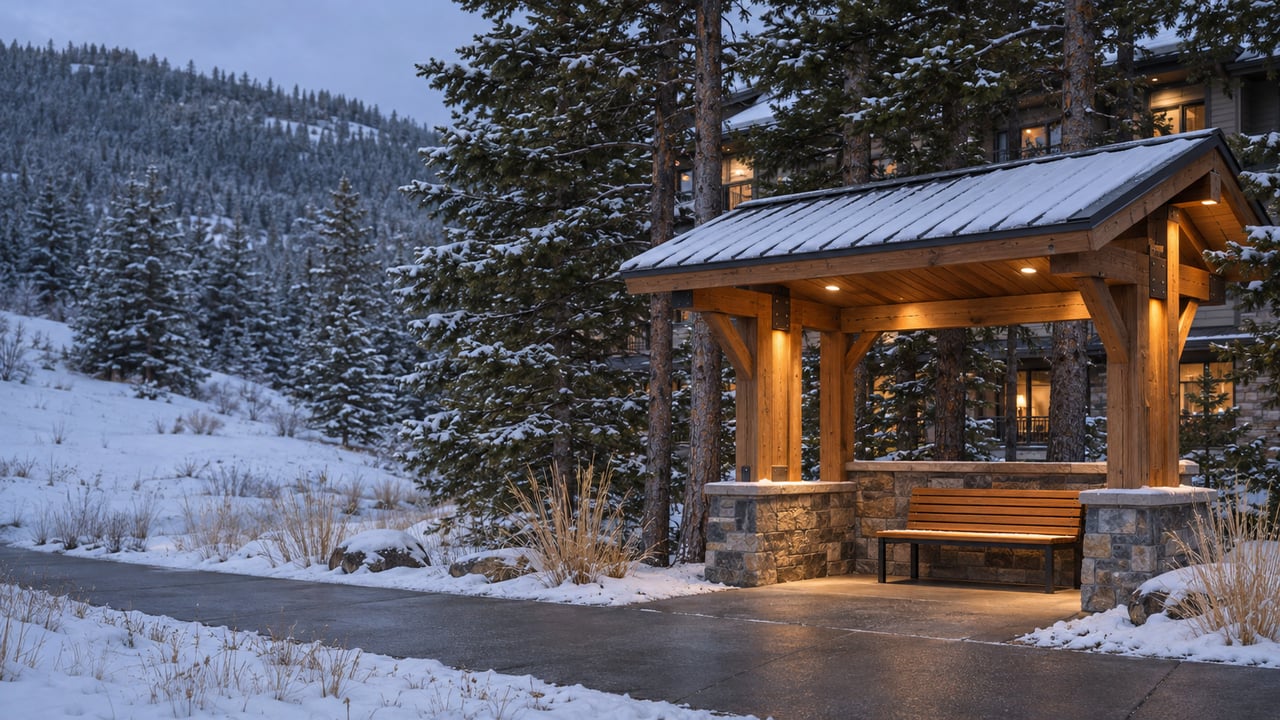
At 6:30 on a winter weekday morning, a free bus stops at Ace Hardware in Livingston. It stops at the Bozeman Health ER entrance, reaches the MSU SUB at 7:20, swings past Oak & 15th and finishes at the Bozeman Walmart at 7:27. In the evening it runs the other way. It leaves the Bozeman Walmart at 4:50, reaches the MSU SUB at 5:15 and gets back to Ace Hardware at 6:05. One trip in and one trip home on weekdays is the whole public commute between the two towns.
If you're weighing a Livingston address against a Bozeman paycheck, start with that schedule, before the listings. The price gap between the two towns is real, and most of it pays you to cover the I-90 miles over Bozeman Pass on your own. How far the discount goes depends on how well your workday fits the bus or the drive.
The bus was built for this exact trip
Streamline's Livingston service is free to ride, like the rest of HRDC's system. The morning run leaves the Bozeman Walmart at 5:50, reaches Livingston at 6:30 and then spends the rest of the trip at Bozeman stops, so it's timed to bring Park County residents to Gallatin County jobs. The stops it makes in Bozeman show which jobs it had in mind: the hospital and the university.
The route goes back to October 2008, when it launched on $85,000 in one-time support from Montana State University, as the Bozeman Daily Chronicle reported at the time. By January 2009 the first bus was full. A second route added later was suspended after higher driver wages made it too expensive, the Chronicle reported. One round trip has been the shape of the service ever since.
It's also seasonal. Streamline's 2025–26 coordination plan runs the Livingston bus from mid-October to mid-April because ridership is lower in spring and summer. The plan calls for evaluating commuter-route frequency but doesn't commit to year-round service or more trips. The service came back for its fall 2024 season, NBC Montana reported. As of mid-November, Streamline's Rider Alerts page lists no start date for this season's Livingston service, so check that page or call the Streamline office at 406-587-2434 before you plan a week around it.
Whose workday the schedule fits
A 7:20 arrival at the MSU SUB and a 5:15 pickup there makes for a long but workable university day. Someone on a hospital day shift near the Bozeman Health stop is in a similar spot. A retail closer, a restaurant cook or a contractor with job sites across the valley gets little use from a bus that only makes these runs.
For days when the bus can't get a rider home, Streamline's route page points to two backstops, the MSU Guaranteed Ride Home program and the City of Bozeman's program of the same name, both tied to logging trips in GoGallatin. If your commute plan depends on one of them, ask the program directly whether it covers your situation.
There are no timed transfers at the Livingston end. Park County's Windrider is a separate free local bus. The county lists weekday hours of 6:15 a.m. to 6:15 p.m., and the City of Livingston's transportation page lists 6:30 a.m. to 5:50 p.m. Either way, Windrider's service day starts within about 15 minutes of the 6:30 pickup at Ace Hardware, so where a home sits in town relative to Ace Hardware matters more than it looks on a map.
What the discount buys
According to Big Sky Country MLS figures for single-family homes closed January 1 through October 31, 2026, the median price in Livingston and Park County was $600,000, compared with $790,000 for Gallatin County and $780,000 inside Bozeman city limits. That's about $190,000, or roughly 24%, between the two county medians over the same ten months. Neither market moved much on price over that stretch. Park County's median was up 0.2% from the same period in 2025, and Gallatin County's was down 0.5%.
Both markets held their prices, so the gap is steady, and it lines up with the drive. The pass sits between the two medians every working day, and the market has kept that price on it through 2026.
Speed is where the two markets did split. Median days on market in Gallatin County fell from 32 to 21 over that window, while Livingston and Park County went the other way, from 31 to 36. Park County sales still rose 8.3% to 157 homes.
That extra two weeks or so of median market time is useful. In Gallatin County a well-priced home can be under contract in about three weeks. A typical Livingston listing gives you room to ride the 6:30 bus, or drive the pass at your real start time, a few times before you write an offer. In Park County, the pace of the market leaves time for that test.
Mile marker 331 and the wind
If the bus doesn't fit your hours, you'll be driving, and the I-90 stretch to watch isn't always the summit. On November 15 and 16, the Montana Department of Transportation's alerts page listed strong crosswinds on I-90 from mile marker 331 to 338 through Livingston. High-profile vehicles and anyone towing had to take the I-90 detour through town. If you'll be hauling a trailer, a camper or a horse rig, that alert matters as much as snow on the pass.
The road itself has had recent work. MDT finished an 11-mile I-90 project from the Jackson Creek Road interchange at Exit 319 to the Business Loop interchange at Exit 330, west of Livingston, on September 22, 2025. It included paving, bridge rehabilitation, guardrail and chip seal. On the Bozeman side, the Bear Canyon to Jackson Creek project added weather-activated flashing lights at four overpasses in 2025, along with rumble strips, barriers and ramp work. It paused for winter on November 25, 2025 and was set to resume the week of April 13, 2026.
The bus faces the same road. Streamline says I-90 closures can stop the Livingston service, and it points riders to 511mt.net for live conditions and webcams. On a closure morning, the bus and the car stay home together.
Who comes out ahead
Working from home changes the math more than anything else. The City of Livingston's August 27, 2026 growth policy data update reports a 9% rise in workers who don't commute and a 2% rise in solo driving to work. Someone who goes to a Bozeman office two days a week keeps nearly all of the roughly $190,000 gap and pays for the pass only on those days. Someone whose shift lines up with the 6:30 and 4:50 runs from mid-October to mid-April pays only in summer, when the bus isn't running. Someone who drives the pass alone five mornings a week, year-round, at hours the bus doesn't cover, pays the most for the same house.
That's the real comparison for anyone deciding between our Livingston and Bozeman neighborhood pages. The gap in median prices only tells you what the commute is worth to the average buyer. Your own schedule decides what it's worth to you.
Quick answers
Does the Livingston bus run in summer? No. Streamline's plan runs it from mid-October to mid-April.
What does it cost to ride? Nothing. Streamline is zero-fare.
Where do I check the road before leaving Livingston? MDT's alerts page posts closures and wind restrictions, and 511mt.net shows live road conditions and webcams.
If you're pricing a Livingston home against a Bozeman job, Brian Heck can line up the listings that fit your commute and help you use Park County's slower market to test the drive before you commit. Start with the buyer resources. If you already own in Livingston and want to know where your home sits against those 2026 numbers, request a home valuation.