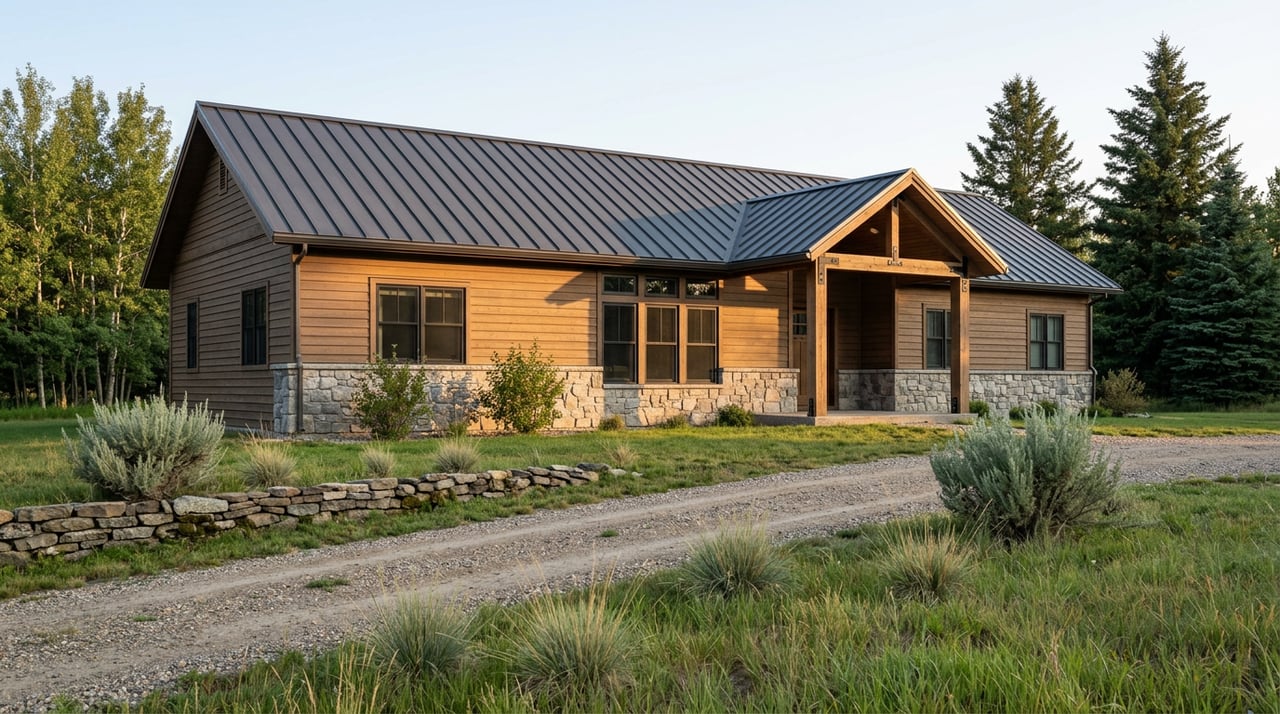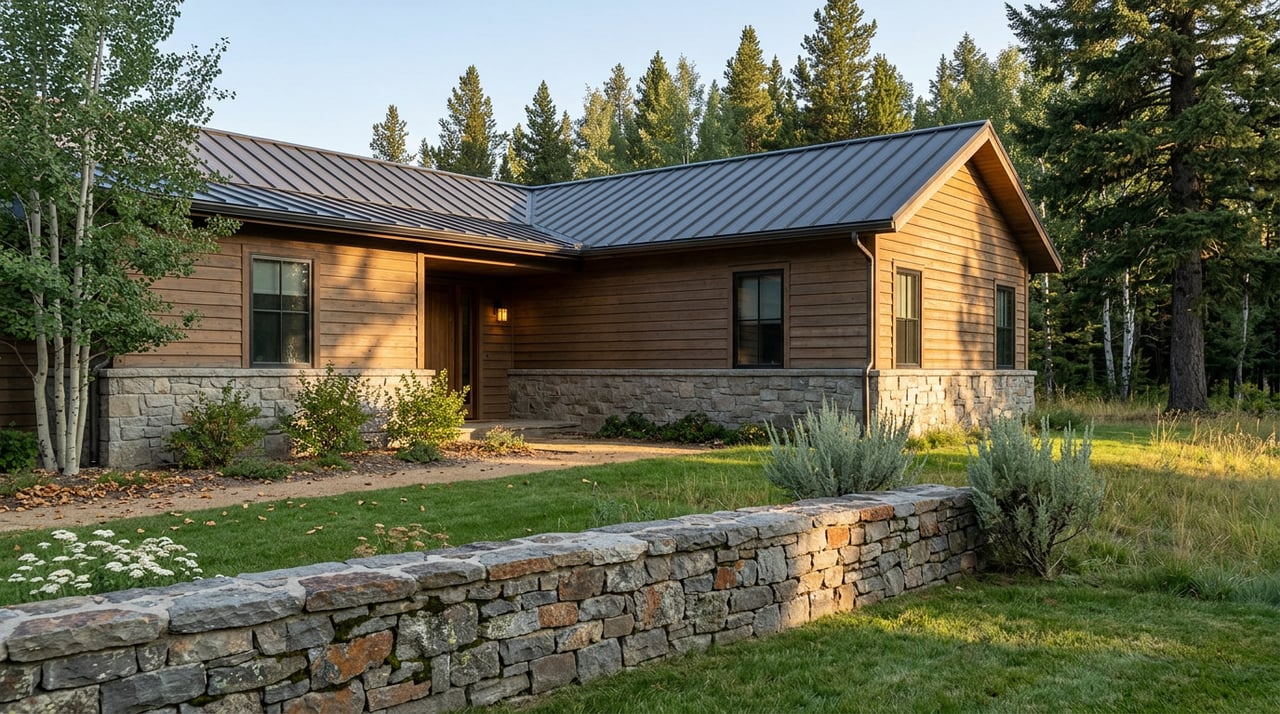
Two homes list for the same price on the same day in Big Sky this fall. Same square footage, same view of Lone Mountain, same walk to the gondola. Which one costs more to own?
The listing sheet won't tell you. The answer is buried in a line most buyers never think to ask about: which county the parcel sits in.
Big Sky is not a city. It has no mayor, no city council, and no municipal boundary. It is what the Census Bureau calls a census-designated place, and it happens to straddle two counties that split it almost down the middle, Gallatin to the east and north, Madison to the west, where the Yellowstone Club and much of Moonlight Basin sit. That single fact, more than square footage or ski access, determines which schools a child is zoned for, which hospital district collects a portion of the property tax bill, and how a homeowner's fire protection gets funded. In the last eighteen months, that line has moved, been contested, been miscalculated, and been put to a vote, all of which changes what a buyer is actually signing up for.
Same Fire Department, Different Math
Start with the plainest example. The Big Sky Fire District covers both counties and answers every call the same way regardless of which side of the line a house sits on. But the two counties calculate the tax bill that funds it differently, and in September 2025 that difference became expensive.
Gallatin County discovered it had been applying the full number of voter-approved mills to its fire district levy each year rather than capping the total dollar amount the way Montana law and inflation limits require. The mistake compounded over four years and led Gallatin County taxpayers within the fire district, roughly 3,000 property owners, to collectively overpay by about $8.5 million, according to county administrator Jim Doar. Madison County, covering the other half of the same fire district, had been calculating correctly the entire time. The fix is expected to cut upcoming fire district tax bills for Gallatin-side owners by as much as half in some cases, while trimming the department's budget by millions and delaying at least one planned hire.
Same fire trucks. Same response times. Two different bills, purely because of which county's finance office ran the numbers.
A Law Written for One Town
The bigger story runs through Madison County, and it starts with a boundary drawn decades before anyone built a Yellowstone Club or a Spanish Peaks. The Madison Valley Hospital District, headquartered at the Madison Valley Medical Center in Ennis, and the Ennis K-12 school district both extend across the Madison range to cover Big Sky's Madison County side. For years, homeowners there paid into a hospital an hour and a half to two hours away by paved road, a distance that shrinks only slightly by Jack Creek Road, a privately owned route through Jack Creek Preserve so rough it has its own Facebook page dedicated to tracking its condition.
Because property tax bills scale with home value, and because the multi-million-dollar homes on Big Sky's Madison County side account for the overwhelming majority of the county's total taxable value, that arrangement meant Big Sky residents were quietly carrying most of a rural hospital district's budget. Reporting on the dispute put the figure at roughly $1.7 million a year flowing from Big Sky into the Madison Valley Hospital District, with Big Sky properties responsible for as much as 85 percent of what the hospital collects from property taxes.
In 2025, the Montana Legislature passed Senate Bill 260, sponsored by Sen. Greg Hertz, after what he called the most difficult legislative fight of his career. The bill created a new process letting residents petition to withdraw from a special district when its boundaries no longer match where they actually receive services, and it built in an eight-year step-down so Ennis's hospital wouldn't lose its funding overnight. Under that formula, Big Sky's contribution to Madison Valley Hospital District would fall from 70 percent of the collected tax in year one to 60 percent, then 40 percent, then 20 percent in the final two years, before ending.
That mechanism only takes effect if voters actually approve the withdrawal and the creation of a replacement district. Big Sky residents in both counties saw that exact question, forming a new Big Sky Hospital or Wellness District, on their May 5, 2026 mail-in ballots. Whichever way that vote landed, the step-down formula SB 260 wrote into law is now the standing rule for how Montana handles a special district boundary that no longer fits the town it was drawn around.
What the Resort Tax Quietly Covers Instead
None of this happens in a vacuum. Big Sky has no municipal government to fund with property taxes, so it leans hard on something most Montana towns don't have: a resort tax. The Big Sky Resort Area District collects a tax on luxury goods and services within its boundaries, a district whose legal description literally traces the Gallatin-Madison county line before looping back. Voters raised the rate to its current 4 percent in May 2020, and in 2025 they voted to extend the district's authority to collect it through 2065, giving the board room to bond against future collections for long-range projects.
That revenue pays for a surprising share of what would otherwise fall on property owners: ambulance and emergency services, public transit, the community library, parks and trails, and a large slice of infrastructure spending. The district's own long-range capital plan has since grown to roughly $777 million in recommended infrastructure investment over the next decade, a scale the district's executive director once called alarming when the plan's total first came into view, and one the board has stressed will draw mostly from bonding, state and federal partners, rather than a new tax on residents.
That distinction matters for anyone comparing Big Sky's tax bill to a typical Montana subdivision. Because so much of daily infrastructure and services rides on a tax paid overwhelmingly by visitors rather than homeowners, property tax data show something that looks backward on paper: Big Sky's Gallatin County side carries a median effective property tax rate of roughly 0.44 percent, according to 2026 tax analytics, well below Gallatin County's own median of 0.65 percent and Montana's statewide median of 0.78 percent, even though Big Sky holds the highest median home value in the county. The median tax bill still lands around $5,884, thousands above the state median, simply because the home values are so much larger. High price, comparatively modest rate, largely because a tourist-funded tax is doing work that property taxes usually do elsewhere.
The Line Doesn't Just Split Taxes
The same county line runs through more than fire and hospital funding. On the Gallatin side, kids attend the Big Sky School District, which includes Ophir Elementary, Ophir Middle School, and Lone Peak High School. On the Madison side, the assigned district has historically been Ennis, even though many of those students actually attend school in Big Sky through informal or negotiated arrangements, one more mismatch SB 260 was written to address. The Big Sky Water and Sewer District and the Big Sky Trails, Recreation and Parks District both operate as two legally separate entities, one per county, linked only by interlocal agreements rather than a single governing board.
A quick way to see how this lines up on paper:
| Gallatin County side | Madison County side | |
|---|---|---|
| Includes | Town Center, Meadow Village | Yellowstone Club, much of Moonlight Basin |
| School zoning | Big Sky School District (Ophir, Lone Peak) | Historically Ennis K-12, subject to change |
| Hospital district history | No hospital district membership as of early 2026 | Madison Valley Hospital District (Ennis) |
| Recent tax event | 2025 fire district overcollection correction | 2026 vote on withdrawing from MVHD |
What This Means Before You Write an Offer
None of this shows up in a standard listing sheet, and a comparable-sales search won't sort by county either. Before comparing two Big Sky properties on price alone, it's worth asking a title company or the listing agent three questions: which county the parcel sits in, which special districts currently levy against it, and whether any of those levies are mid-transition the way the hospital and wellness districts are right now. None of these mechanisms change what a home is worth to live in. They do change what it costs to hold, and that number belongs in the same conversation as price per square foot.
A Few Questions Worth Answering Directly
Does the county line affect whether I can build or renovate? Zoning authority follows the same county split as everything else. Gallatin County's planning and zoning commission, guided by a locally appointed advisory committee, reviews parcels on the Gallatin side, while Madison County handles its own share of Big Sky separately. Confirming which jurisdiction applies to a specific parcel is worth doing before finalizing renovation plans.
Will the wellness district vote raise my taxes if I buy on the Gallatin side? If a Gallatin County wellness district is approved, state law caps any new mills at three without a separate vote, which works out to roughly $20 a year per $1 million of assessed value. That's a modest addition relative to the broader tax picture, but it is new.
Is the resort tax charged on my mortgage or my purchases? The resort tax applies to sales of taxable goods and services within the district's boundaries. It has no bearing on financing or closing costs. It functions more like a local sales tax paid at checkout than anything tied to homeownership itself.
Southwest Montana rewards buyers who ask the second question, not just the first. If you're comparing properties on either side of Big Sky's county line and want a clear picture of what each one actually carries in taxes and district obligations, Brian Heck can walk through the specifics parcel by parcel. Request a home valuation and we'll start with the numbers that don't show up in the listing.