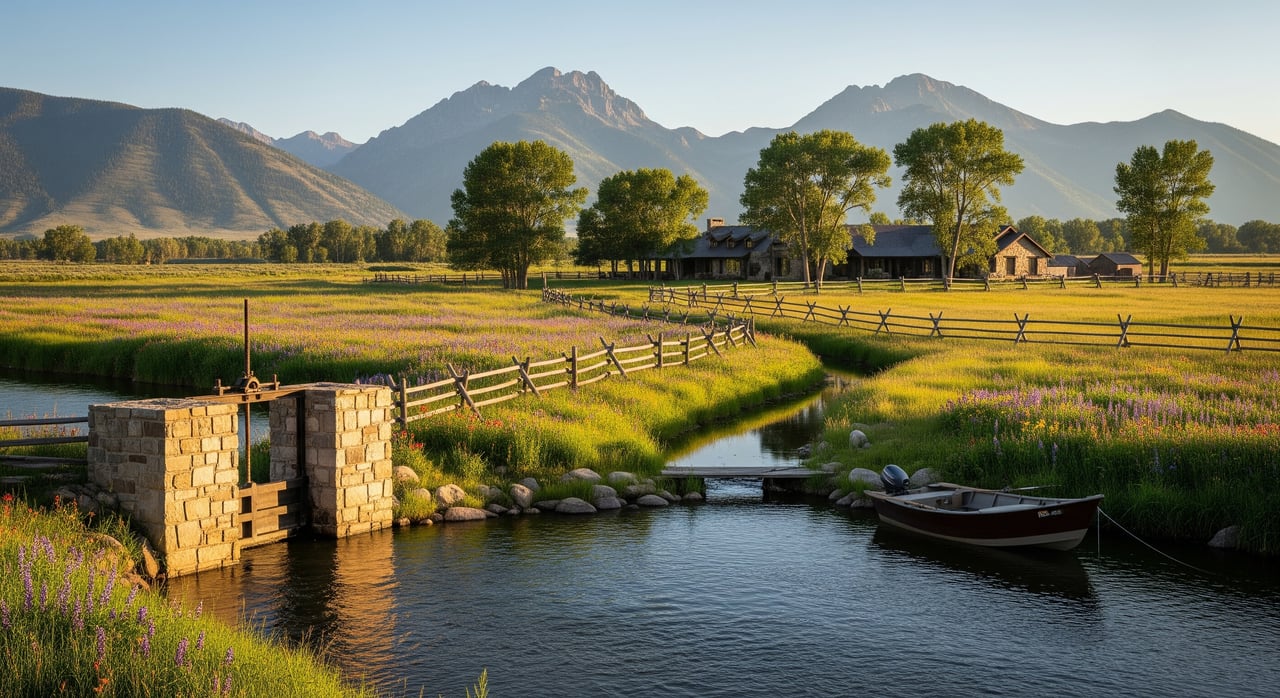
If you are looking at land near Ennis, you have likely heard that water makes or breaks a property. The paperwork can be dense, and what flows to a field in July may not match what is on a certificate. You want a clear path to verify what you are buying and how it can be used in real life. This guide gives you the Montana basics, the key DNRC records to pull, how ditch shares and wells typically work around Ennis, and a step-by-step due-diligence plan you can put to work. Let’s dive in.
Montana water rights basics
Montana follows prior appropriation, often summarized as first in time, first in right. When there is a shortage, older rights have priority over newer ones. That seniority can determine whether you receive water in a dry spell.
Water rights are a separate property interest from the land. They can transfer with the parcel, but they can also be severed, leased, or owned as shares in a ditch company. Always confirm what is included in your purchase rather than assuming water comes with the deed.
You will see different status types in the record. A permit is authorization from the state to appropriate water, while a certificate, decree, or claim reflects a right that has moved through adjudication or certification. DNRC can also approve changes to a right, such as a new point of diversion, place of use, or purpose.
Most Montana rights require continued beneficial use. If water is not used as authorized, nonuse or abandonment rules can affect the right. Both surface water and groundwater are administered by DNRC, and wells are generally brought into the system through DNRC’s water-rights process.
DNRC records to review
Your best early step is to pull the official DNRC records for the parcel. DNRC Water Rights Abstracts and the Water Rights Query or Atlas show the priority date, flow or volume, point of diversion, place of use, purpose, and current status. These abstracts are your objective summary for what the state recognizes.
If the parcel uses a well, obtain the well permit and the well log. These show depth, static level, pump size, and sometimes measured yields. Compare what is permitted to what the well and pump can actually deliver.
Where surface water is delivered through ditches, look for decrees and ditch company documents. These often explain how water is apportioned among shareholders and whether rotational delivery or assessments apply. Ask for bylaws and any notices about capital projects.
Review files for any change or transfer applications and related objections. These records reveal proposed modifications and whether anyone contested them. Also check for instream-flow reservations or environmental protections that could affect diversions or timing.
County records can matter too. Easements for ditches, recorded irrigation assessments, or access rights may be filed with the Madison County Clerk and Recorder. Local conservation and NRCS offices can provide context on infrastructure, crop water needs, and conservation programs.
How water is delivered in the Madison Valley
Many irrigated properties around Ennis receive water from surface diversions tied to the Madison River or its tributaries. Delivery is often through mutual ditch companies or irrigation districts. Each diversion has a defined point and a flow rate, and water may be allocated to you on a share basis.
Shares represent a proportionate interest in the ditch’s supply. They may be transferable or appurtenant to the land, depending on the company’s bylaws and historic practice. Shares often carry maintenance assessments, and unpaid balances can follow the property.
Rotational delivery is common during irrigation season. You may receive water on a set schedule or “turn,” which affects how many acres you can practically irrigate. The calendar can matter more than the paper flow rate, especially in peak demand months.
Groundwater wells are widely used for domestic and irrigation needs. Key parameters include the permitted rate in gallons per minute, any total volume limits, and pump capacity. Older wells or claims may have less complete documentation, so plan for testing.
If you plan to move a point of diversion or change a place of use, you will need DNRC approval. The state evaluates potential impacts to other rights, and third parties can object. Around the Madison, fishery and instream-flow considerations can influence timing or availability.
Step-by-step due diligence
A. Gather documents early
- Ask the seller for DNRC abstracts or certificates, ditch share documents, well permits and logs, and any change or adjudication files.
- Request recent ditch-company assessments or invoices and any notices about repairs or projects.
- Order a title report and have the title company flag easements, recorded irrigation assessments, liens, or statements about water or shares.
B. Confirm DNRC records
- Pull DNRC Water Rights Abstracts or query the Atlas for the parcel. Verify the priority date, authorized flow or volume, points of diversion, place of use in acres, and stated purposes.
- Check the status of each right: permit, claim, certificate, or decree. Note any change authorizations tied to the right.
- Look for pending DNRC change applications or objections. Unresolved items can affect your intended use or timeline.
C. Verify delivery and practical use
- Contact the ditch company or irrigation district. Confirm the number of shares tied to the property, how water is allocated per share, and whether shares are appurtenant or severable.
- Ask about delivery schedules, shortage procedures, maintenance responsibilities, current assessments, and any planned repairs or capital projects.
- Walk the property to inspect headgates, laterals, pumps, pipelines, and fencing. Note condition, recent upgrades, or any unauthorized modifications.
- If a well supplies water, schedule a pump test to measure actual yield and drawdown. Compare results to permitted rates and the pump’s specifications.
D. Engage specialists
A water-rights attorney can review abstracts, deed language, severability of shares, and any transfer or change issues. They can advise on contract language and risk.
A water-resources engineer or hydrologist can interpret flow and volume units, evaluate deliverability in dry years, and assess feasibility for proposed changes.
A licensed well driller or pump contractor can test wells, verify yields, and advise on pump sizing and compliance.
Ditch-company officers and local ag contacts can share practical insight on rotation schedules, enforcement, and historic reliability.
E. Build contract protections
- Include a water-rights contingency giving you time to obtain DNRC abstracts and review them to your satisfaction.
- Add a contingency to verify ditch-share ownership and to confirm no outstanding assessments or liens.
- Include a well test contingency and time for professional review by your attorney and engineer.
- Extend deadlines to accommodate DNRC records, ditch-company responses, and specialist reports. Some steps can take weeks or longer.
F. Plan for future uses
- If you intend to expand acres, change a place of use, or drill a new well, expect DNRC authorization to be required.
- Be aware that third parties can object to change applications. Build your budget and timeline with that risk in mind.
- Check for instream-flow reservations or protected reaches in the watershed that could limit new or changed diversions.
Red flags in Ennis deals
- Missing or incomplete DNRC documentation for claimed rights, especially older paper claims without certificates.
- Ditch-share ambiguity, where shares are not clearly tied to the deed or historic practice is not documented.
- Aging or damaged infrastructure, including headgates, laterals, or pumps that limit delivery below permitted amounts.
- Well performance that does not meet the permitted rate, indicating a mismatch between paper capacity and actual yield.
- Pending disputes, change applications, or adjudication cases on the same reach of the river.
- Rotational or seasonal limits that reduce irrigated acreage below what the paper entitlement suggests.
- Unpaid ditch assessments or liens attached to the property.
Timelines and expectations
Basic DNRC abstracts and record checks can take days to a few weeks. Ditch-company confirmations and document exchanges also range from days to several weeks, depending on responsiveness. Schedule well testing ahead, as it can take weeks to book and a few days to complete.
Allow 2 to 6 weeks for attorney and engineering reviews in a standard transaction. Complex change applications or technical studies take longer. DNRC permits or change approvals can take months to over a year, especially if contested or complex.
Costs vary by consultant, scope, and complexity. Plan to obtain written estimates from attorneys, engineers, drillers, and any other specialists before you waive contingencies.
How a local agent helps
A local agent coordinates moving parts so your diligence stays on track. Early in escrow, your agent can request seller records, pull DNRC abstracts, and flag likely issues from public files. They help identify which specialists to engage and in what order.
On the ground, your agent can coordinate with ditch-company officers, schedule site visits, and collect assessments and bylaws. They can work with your attorney to set water-right contingencies, align timelines, and track inspection and contingency removal dates.
You still rely on attorneys and engineers for legal and technical conclusions. The benefit is speed and focus. An experienced agent helps you prioritize the most relevant investigations for the specific property, given local practice in the Madison Valley.
Buying land around Ennis can be rewarding when the water story is clear. With the right records, on-site checks, and a team that knows the valley, you can move forward with confidence. If you want a local partner to help coordinate the process and keep your deal moving, reach out to Brian Heck to start the conversation.
FAQs
What does prior appropriation mean for Ennis buyers?
- It means older water rights have priority in shortages, so a senior right is more likely to receive water than a newer one when supplies are tight.
Do water rights automatically transfer with Ennis land?
- Not always. Water rights are a separate property interest and can be severed, leased, or owned as ditch shares, so you must confirm what transfers with the deed.
How do ditch company shares work in the Madison Valley?
- Shares entitle you to a proportion of a ditch’s supply, often with rotational delivery and maintenance assessments, and may be appurtenant or transferable per the bylaws.
Which DNRC documents should I pull before closing?
- Obtain DNRC Water Rights Abstracts, well permits and logs, any change or transfer files with objections, and check the Atlas for priority date, flow, diversion points, and place of use.
How long do DNRC change approvals typically take?
- Expect months to over a year in complex or contested cases, plus time for public notice and possible objections.
What infrastructure issues should I look for on site?
- Inspect headgates, laterals, pumps, and pipelines for condition and compliance, and verify that the system can deliver close to the permitted rate and volume.
Do I need a water-rights attorney for an Ennis land purchase?
- If there is any ambiguity about rights, shares, or planned changes, a water-rights attorney is valuable for legal review and contract protections.