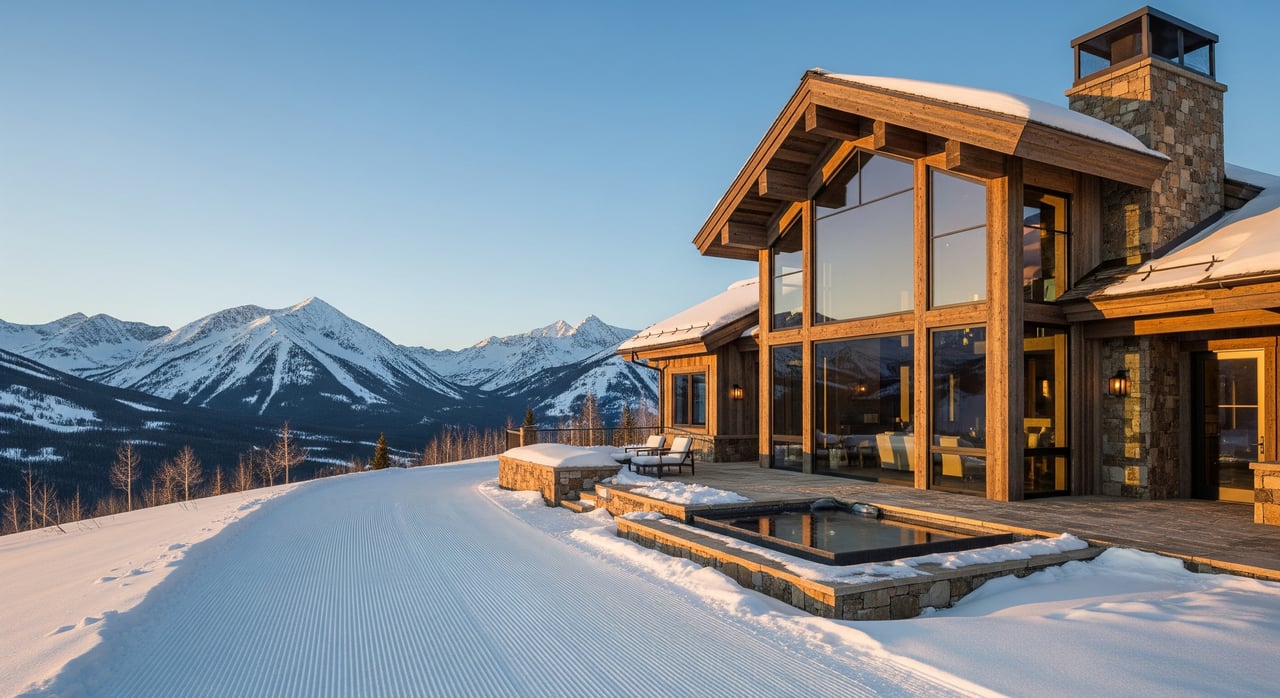
Looking at ski-in/ski-out listings in Big Sky and wondering why some command eye-popping premiums while others feel more approachable? You are not alone. When you buy slopeside in Big Sky, you are paying for convenience, certainty, and a specific resort experience that varies by micro-location and ownership details. In this guide, you will learn what actually drives those price differences, how to verify a seller’s claims, and what to prioritize for personal use or investment. Let’s dive in.
What “ski-in/ski-out” really means
Not all slope access is equal. The market pays in tiers based on how frictionless your ski day feels.
True ski-in/ski-out
This is the highest premium. You step out, click in, and you are on a groomed run or dedicated skiway that delivers you to a lift. At day’s end, you glide back to your door or building entry. No shuttle and no vehicle required. In Big Sky, these homes or condos sit directly on runs in Mountain Village, Meadow Village, and select Spanish Peaks or resort-adjacent enclaves. Legal access often depends on recorded easements and clearly defined grooming responsibilities.
Lift-adjacent or doorstep to lift
You walk a short distance, often across a plaza or a few stairs, to reach a chairlift, gondola, or tram. It is very convenient and still commands a high premium, but you are not clipping in at your door.
Ski access via short shuttle or valet
A private shuttle or resort service brings you close to the lifts. It is easier than driving, yet the perceived convenience is a step down from true slope adjacency. Prices reflect that tradeoff.
Walk to slope or shuttle
You can walk to the base or to a shuttle stop, or you drive a short distance. These properties are near the resort, not truly ski-in/ski-out, so premiums are lower.
Big Sky context that moves the needle
The Big Sky experience is shaped by the resort’s scale and neighborhood layout. Buyers often reference mountain stats and terrain access when judging long-term value. Big Sky is known for significant vertical and snowfall, with commonly cited mountain statistics that include a summit elevation around 11,000 feet, a vertical drop around 4,300 feet, and average annual snowfall often cited around 400 inches. For current figures and the latest lift network, check the official Big Sky Resort site.
- Mountain Village and Meadow Village. These are core resort areas with lifts, plazas, and village services. Properties here often capture the strongest ski-access premiums due to immediacy and pedestrian convenience.
- Spanish Peaks and Moonlight Basin areas. These offer pockets of slope-edge homes and private club amenities. Premiums vary by exact lift or run proximity and amenity set.
- Town Center and nearby communities. A bit farther from the lifts, typically with shuttle access. These can be attractive for buyers prioritizing village conveniences at a lower access premium.
Big Sky spans portions of Gallatin and Madison counties, and county differences can affect taxes, permitting, and some HOA rules. Confirm county parcel records during due diligence.
Access details that command premiums
In Big Sky, the micro-details of getting from your door to the snow matter.
- Which lift or run. Value increases when your access ties to signature lifts, tram connections, or well-groomed runs. Name the lift or run and verify it on the resort’s lift and trail resources.
- Steps and crossings. Count the steps from your door to the snow, and note any road or bridge crossing. In ski boots, small frictions feel big, especially for families.
- Gradient and safety. Gentle gradients and safe, groomed approaches feel more accessible for mixed-ability groups and younger skiers.
- Elevation and snow reliability. Higher or more shaded aspects can hold snow better, while sunnier aspects may offer nicer light and shoulder-season variability. The market prices these tradeoffs differently.
- Recorded access. True ski-in/ski-out is often supported by recorded easements. Verify who maintains the skiways and grooming.
Amenities that justify higher prices
Slope access is just the start. Premiums grow when daily use becomes luxurious and effortless.
- Dedicated ski lockers and heated boot rooms with direct slope access.
- Private or reserved parking, heated garages, and snowmelt walkways.
- In-building concierge or front desk, private shuttle or valet, and on-site management.
- Wellness features such as spa, hot tubs, and pools.
- High-end finishes and optional club memberships where available.
- Direct lift or tram adjacency, or private elevators to plazas.
- Ownership perks such as preferred lift tickets or resort services, when offered.
Ownership rules, HOAs, and your returns
For buyers and investors, the HOA structure can amplify or compress value.
- Dues and reserves. Slope-edge buildings often carry higher dues to cover snow management, amenities, and staff. A higher fee can be a positive if it funds reliable services and strong reserves. Review budgets and reserve studies.
- Rental rules. Some developments allow nightly rentals year-round. Others impose minimum stays, owner-use weeks, or caps. Review the program documents, including any owner blackout periods that overlap with high-demand dates.
- Easements and access rights. Confirm recorded trail or skiway easements, grooming responsibilities, and liability provisions in CC&Rs or deeds.
- Taxes and assessments. Lodging taxes and resort or local assessments may apply. County differences can affect carrying costs over time.
Rental economics and demand seasonality
Winter drives the bulk of rental revenue in Big Sky, while summer activities like biking, hiking, fishing, and proximity to Yellowstone support the shoulder seasons. Airport connectivity is a major demand driver. The Bozeman–Yellowstone International Airport is typically a 40 to 60 minute drive in normal conditions, which helps support higher occupancy and ADR for convenient properties.
When you evaluate a listing’s income potential, analyze:
- Occupancy and ADR by month. Peak winter weeks often drive most of the year’s gross revenue. Test your sensitivity to softer months.
- Net income. Subtract management fees, HOA dues, utilities, taxes, reserves, and capital expenditures to understand NOI.
- Comparable performance. Request booking and revenue reports from the manager, and review third-party STR data sources for context.
- Inventory and competition. Oversupply in peak weeks can pressure rates. Micro-location and true slope access often defend pricing power.
Views, orientation, and privacy
Views to Lone Mountain, groomed runs, and wide panoramas remain durable value drivers in Big Sky. Orientation also matters. South and west exposures bring warm afternoon light and dramatic sunsets, while shadier aspects can preserve snow longer. Privacy is another premium feature, especially when your entry is tucked away from village foot traffic or public pathways. If views are central to your decision, review neighborhood covenants and future development rights to understand potential changes.
Risks to price and performance
Plan for the less glamorous parts of owning on the slope.
- Snow and slope exposure. Slope-edge buildings deal with heavy snow loads, snowmelt systems, and moisture management. Maintenance costs can be higher.
- Winter access. Evaluate road reliability and emergency egress during heavy storms.
- Regulatory change. Rental caps or new rules can affect returns. Stay informed with county planning updates.
- Market dynamics. Changes in lift infrastructure, village design, or resort investment can shift premiums between micro-locations over time.
A practical checklist for showings
Use this to verify claims and compare apples to apples.
Location and access
- Confirm the ski-in/ski-out claim with recorded easements or plat references.
- Identify the exact lift or run. Verify on official resort materials.
- Count walking minutes in ski boots and note any road or bridge crossing.
- Ask who grooms or maintains private trails and when access is available each season.
Micro-location and connectivity
- Confirm the neighborhood: Mountain Village, Meadow Village, Spanish Peaks, Town Center, or other.
- Estimate drive time to the airport and consider winter road conditions.
- Note proximity to restaurants, groceries, medical services, and village activities.
Unit and building features
- Check for a private ski locker, heated boot room, and direct slope access.
- Confirm floor level, orientation, and view corridors.
- Verify parking type and snow removal details.
- Review amenities such as concierge, shuttle, spa, or pool.
HOA, legal, and financial
- Review dues, recent budgets, and the reserve study. Ask about special assessments.
- Read CC&Rs and rules governing rentals and owner use.
- Examine rental management agreements, fee schedules, revenue splits, and blackout dates.
- Clarify which utilities are included in dues.
Income and expense analysis
- Request historical rental income and occupancy by month.
- Calculate gross versus net returns after all fees and capital needs.
- Compare ADRs and occupancy with similar units in the same complex.
Title, survey, and easements
- Obtain a current survey to validate proximity claims and easements.
- Confirm recorded trail maintenance or rights-of-way.
- Review title insurance for any slope or easement exclusions.
Operational and physical risk
- Ask about slope hazard exposure and any mitigation measures.
- Review the building envelope, roof history, heating systems, and snowmelt equipment.
- Confirm winter road clearing responsibilities and emergency access.
Comparables and trends
- Study recent closed sales within the same micro-location.
- Track active inventory for slope-adjacent versus walk-to properties.
- Note any announced lift or infrastructure projects that could alter value in the area.
How to prioritize for your goals
- If personal use drives the decision. Prioritize true slope adjacency, minimal steps to snow, and views that match your lifestyle. You will likely accept higher dues if they fund the services you use most.
- If rental returns are central. Focus on verified access, consistent grooming, on-site management with proven ADR and occupancy, flexible owner-use policies, and durable amenities that photograph and market well.
- If you want both. Balance access quality with HOA efficiency and proven rental infrastructure. Verify revenue splits, blackout dates, and seasonal performance before you bid.
A thoughtful plan that blends lifestyle goals with clear financials is the key to buying confidently in Big Sky. If you would like a disciplined evaluation of a specific listing, a comps review, or help obtaining HOA and access documents, reach out to Brian Heck for local guidance and a calm, numbers-forward approach.
FAQs
What defines true ski-in/ski-out in Big Sky?
- It means you can clip in and ski from your door or building entry to a groomed run or lift, then return the same way, with recorded easements and no shuttle or vehicle required.
How much more do true slope-edge homes cost?
- Premiums vary by micro-location, access quality, and amenities, but the highest prices tend to track the most frictionless, legally documented, and reliable slope access.
How do HOA dues affect value on slopeside units?
- Dues are often higher to fund snow management, amenities, and staff; that can be positive if services and reserves are strong, so review budgets and reserve studies.
What should investors analyze before buying a Big Sky rental?
- Verify monthly occupancy and ADR history, net income after fees and dues, rental rules and blackout dates, and comparable performance within the same complex or micro-location.
Do views of Lone Mountain hold their premium?
- Views are durable value drivers, but future development or tree growth can alter corridors, so review neighborhood covenants and development rights.
How far is Big Sky from the Bozeman airport for guests?
- Typical drive time to Bozeman–Yellowstone International Airport is about 40 to 60 minutes in normal conditions, which supports demand for high-convenience rentals.